Perth to Exmouth Road Trip – The Ultimate 14 Day Itinerary
The stretch of coastline between Perth and Exmouth is easily one of our favourite road trips in Australia. It’s a long drive, taking around 13 hours if you were to do it in one go, but there’s so much to see along the way that you’d be missing the best part if you drove straight there.
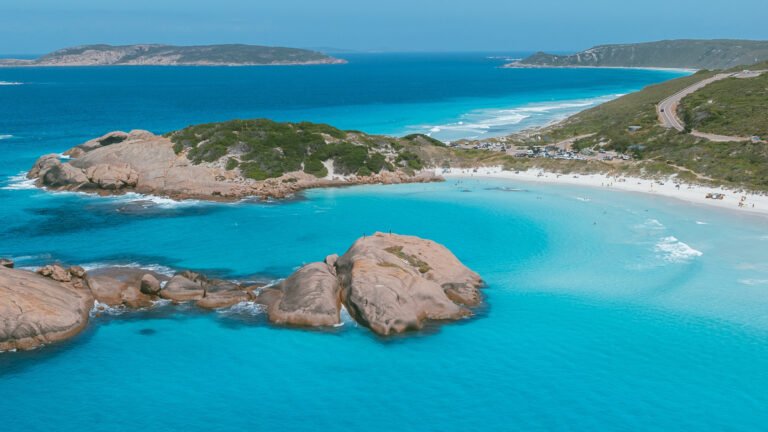
This part of Western Australia has some of the most unique landscapes we’ve come across on our travels around the country. Think bright pink lakes, red coastal cliffs and some of the clearest water you’ll find anywhere in Australia.
We’ve travelled this coastline a few times now and still find places we’d happily go back to. This Perth to Exmouth road trip itinerary follows the route we’d recommend if you have around two weeks, taking you along the coast towards Ningaloo Reef, with plenty of time for swimming, snorkelling, camping and exploring along the way.
Planning an Australia Road Trip?
I’ve added all of our favourite places around Australia to my interactive Australia Travel Guide, including 500+ things to do, hidden gems and tips from my travels around the country. You can explore my Australia Travel Guide here.
Our 14 Day Perth to Exmouth Itinerary
Here’s a quick look at our full Perth to Exmouth road trip route. Click on any day below to jump straight to that part of the itinerary.
Day 1: Perth to Jurien Bay
Day 2: Jurien Bay to Kalbarri
Day 3: Kalbarri National Park
Day 4: Kalbarri to Shark Bay
Day 5: Shark Bay
Day 6: Shark Bay to Coral Bay
Day 7: Coral Bay
Day 8: Coral Bay to Exmouth
Day 9: Cape Range National Park
Day 10: Cape Range National Park
Day 11: Swim with Whale Sharks or Explore Exmouth
Day 12: Exmouth Beaches and Surfing
Day 13: Start the Drive Back to Perth
Day 14: Final Stretch to Perth
When is the Best Time to Visit Exmouth
The best time to visit Exmouth is between March and October. This avoids the hottest and most humid part of the year and also overlaps with some of the best marine life experiences on Ningaloo Reef. Whale shark season runs from around March into August and sometimes as late as October.
The northern part of WA can also be affected by tropical cyclones during the warmer months from November to April. It’s best to avoid this season as you’ll be met with heavy rainfall and strong winds.
Do You Need a 4WD for Perth to Exmouth?
No, you don’t need a 4WD to follow this itinerary. The main road between Perth and Exmouth is sealed, and most of the places I’ve included can be reached in a normal 2WD.
That said, having a 4WD will open up a few extra places and campsites along the way. This is particularly useful around Shark Bay and some of the more remote coastal areas.
14 Day Perth to Exmouth Road Trip Itinerary
Day 1 – Perth to Jurien Bay
Start the morning exploring Perth before hitting the road north towards Jurien Bay. If you haven’t spent much time in Perth before, you could use the morning to wander around Fremantle, grab breakfast and stock up on anything you need for the trip.
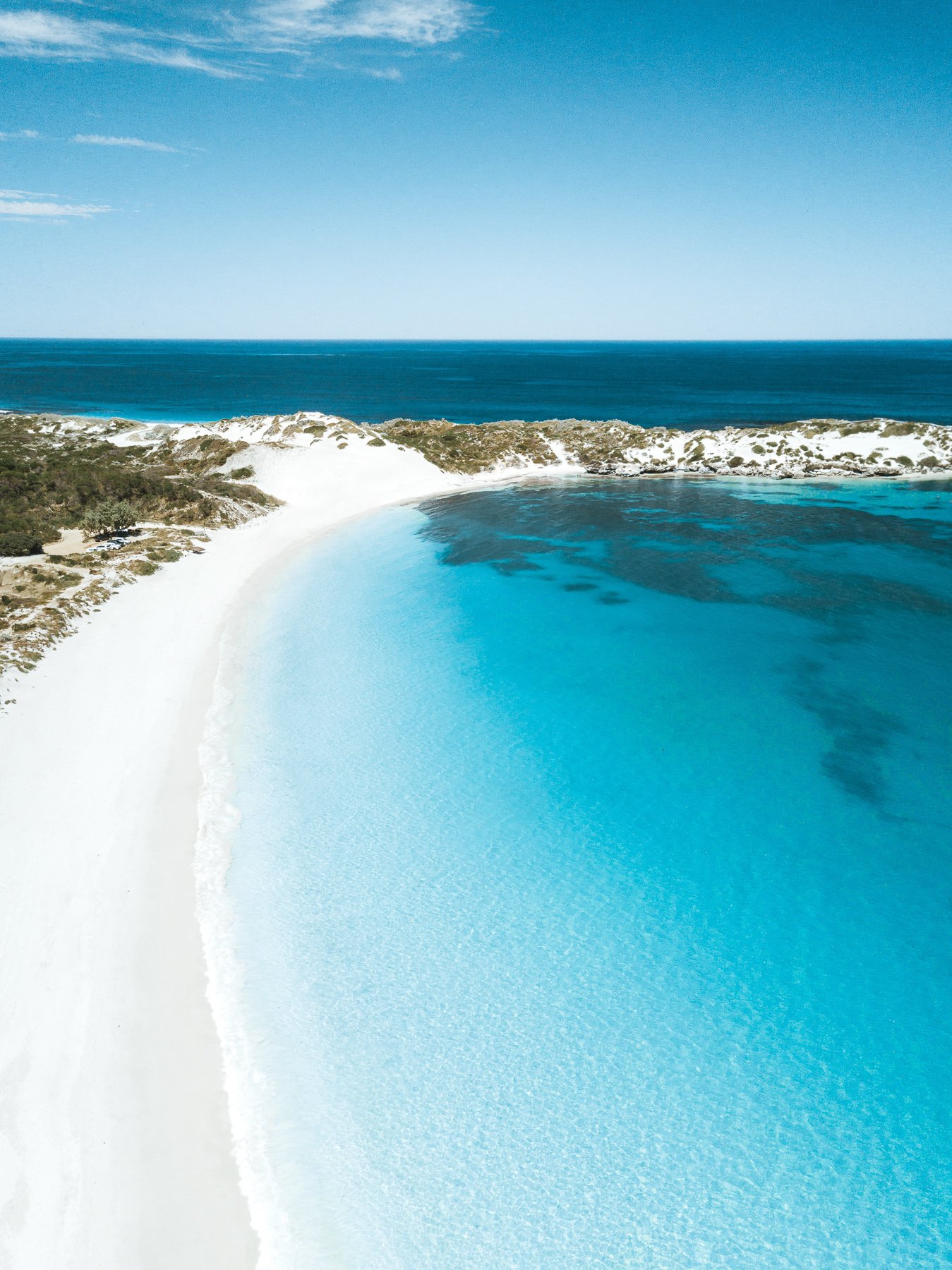
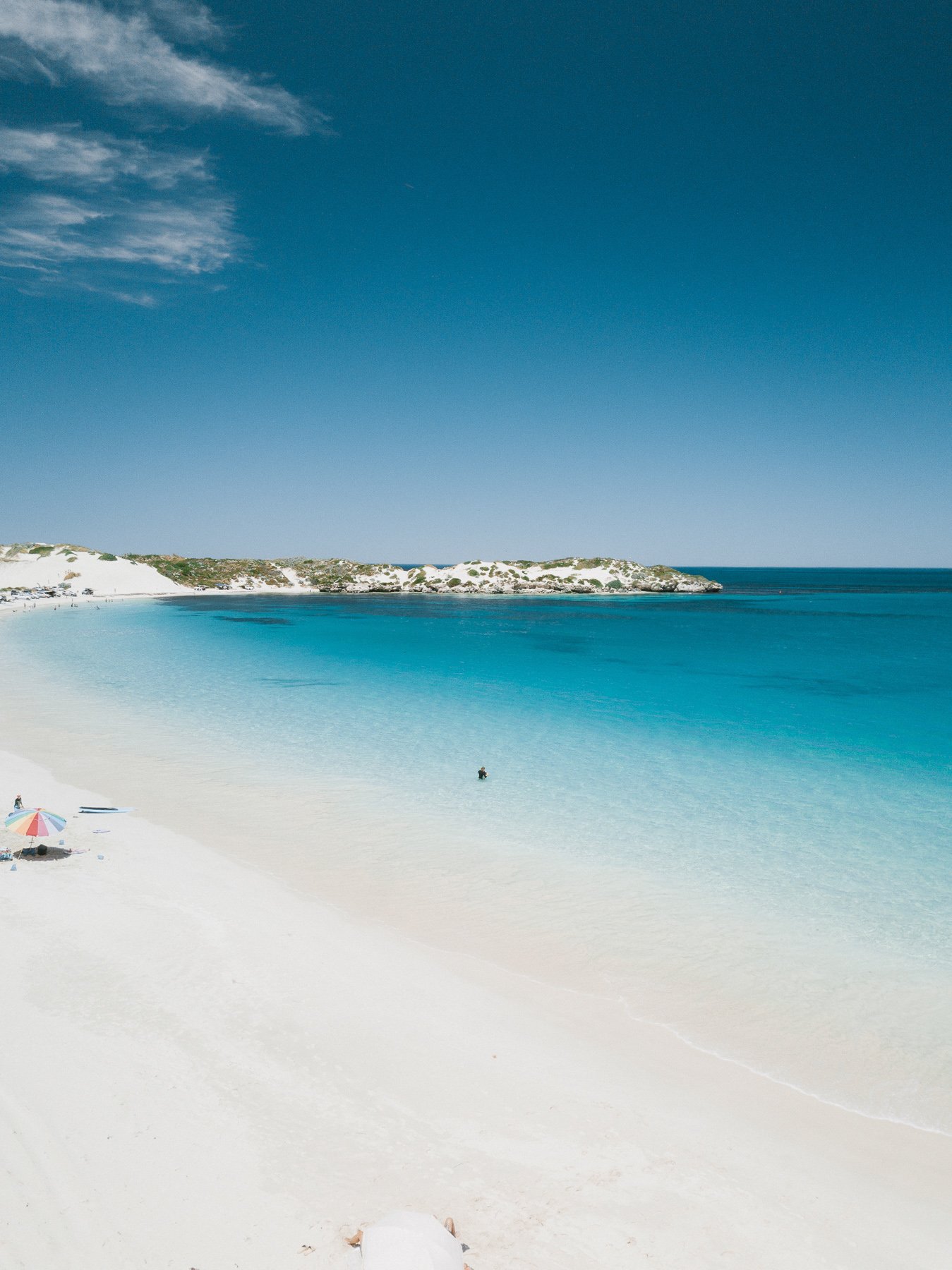
Jurien Bay is only around 2.5 hours north of Perth, making it a nice easy first day on the road. It’s also one of our favourite spots to go camping along this stretch of coastline, with crystal clear, protected water that’s perfect for swimming and snorkelling.
There are a few campsites and caravan parks around Jurien Bay, but our go-to has always been Sandy Cape Recreation Park. The campsites are tucked right beside the beach, with the water only a short walk away, so it’s an amazing place to settle in for the afternoon, go for a swim and spend your first night on the coast. Camping at Sandy Cape costs $25 per night for a site and you can book ahead online.
Day 2 – Jurien Bay to Kalbarri
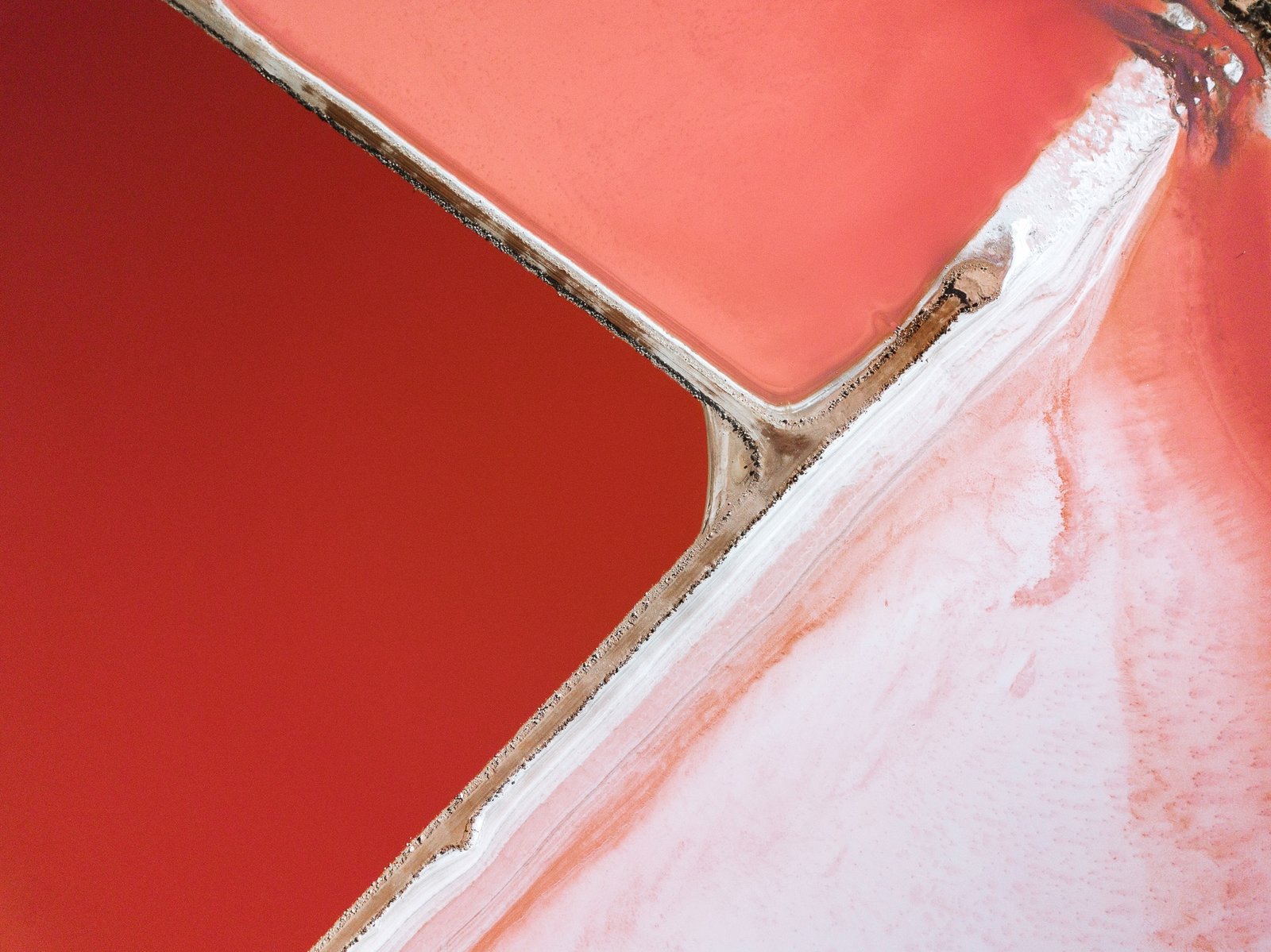
After one last morning at the beach, continue north towards Kalbarri. Before reaching town, make the detour to Hutt Lagoon near Port Gregory. Hutt Lagoon is still one of the most beautiful pink lakes we’ve seen in Australia, especially for photography. The incredibly pink water is such a strange contrast against the surrounding landscape and it almost doesn’t look real when the colour is at its best.
We’ve visited Hutt Lagoon a few times and it has looked different every single time. The colour and water levels can change throughout the year, and during drier periods you’ll often see more exposed salt and crystallisation around the lake.
There are a few places around the edge where you can stop and take in the view. And a little warning from experience: the water is incredibly salty and it stinks! People do get into the lake, but we’ll leave that decision up to you. From Hutt Lagoon, it’s only around another 40 minutes to Kalbarri.
Day 3 – Kalbarri National Park
Kalbarri is where the landscapes really start to change. It’s home to some of the most unique rocky coastline along this route. One of my favourite things about this area is the contrast between the red earth and the ocean. Along the coast, massive red cliffs drop towards bright blue water and it feels completely different to most beaches. Before heading into the national park, stop at some of the coastal lookouts. Pot Alley and Red Bluff have always been two of our favourites.
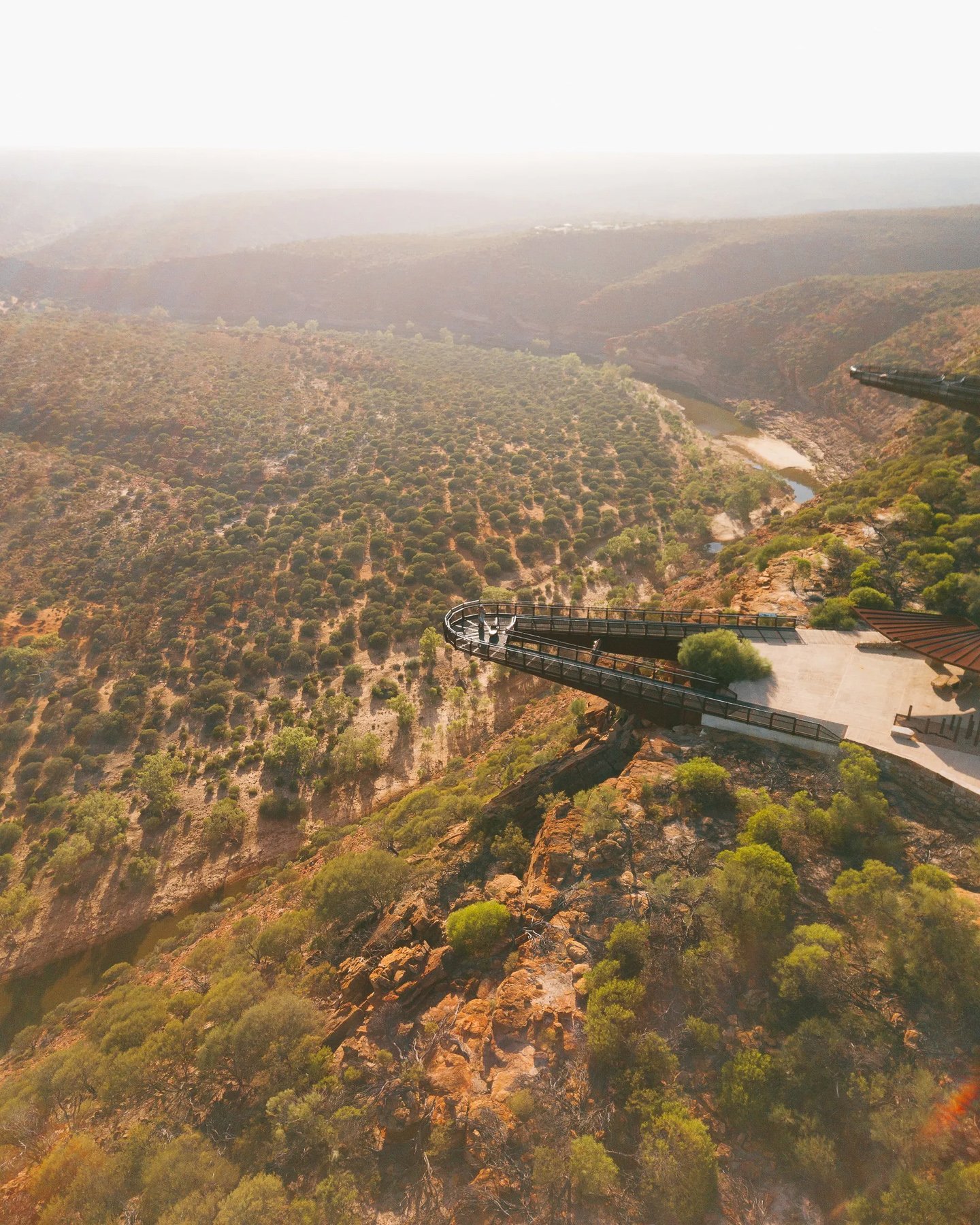
Give yourself most of the day to explore Kalbarri National Park. The two places I’d make sure you don’t miss are Nature’s Window and Kalbarri Skywalk. Nature’s Window is probably the most recognisable view in the park, while the Skywalk gives you a completely different perspective looking out over the gorge. If you want to walk a little further, Z Bend is another one worth adding. For something much more adventurous, there’s the 9km Loop Trail, which begins around Nature’s Window and follows the Murchison River through the gorge.

Day 4 – Kalbarri to Shark Bay
Leave Kalbarri and continue north towards Shark Bay. It requires a detour away from the main highway, but if you have enough time I definitely think it’s worth adding. This is where you’ll start seeing those epic Western Australian landscapes of deep red earth meeting white sand and incredibly clear blue water.
One of the easiest stops on the way towards Denham is Shell Beach, which is made up of millions of tiny shells rather than normal sand. We didn’t find Shell Beach quite as beautiful as we’d imagined before visiting but it was still unique. Most of the shells are very small and mostly broken, so don’t expect a beach covered in huge perfect shells. That said, it’s still incredibly unique and worth stopping to see for yourself.

Day 5 – Shark Bay
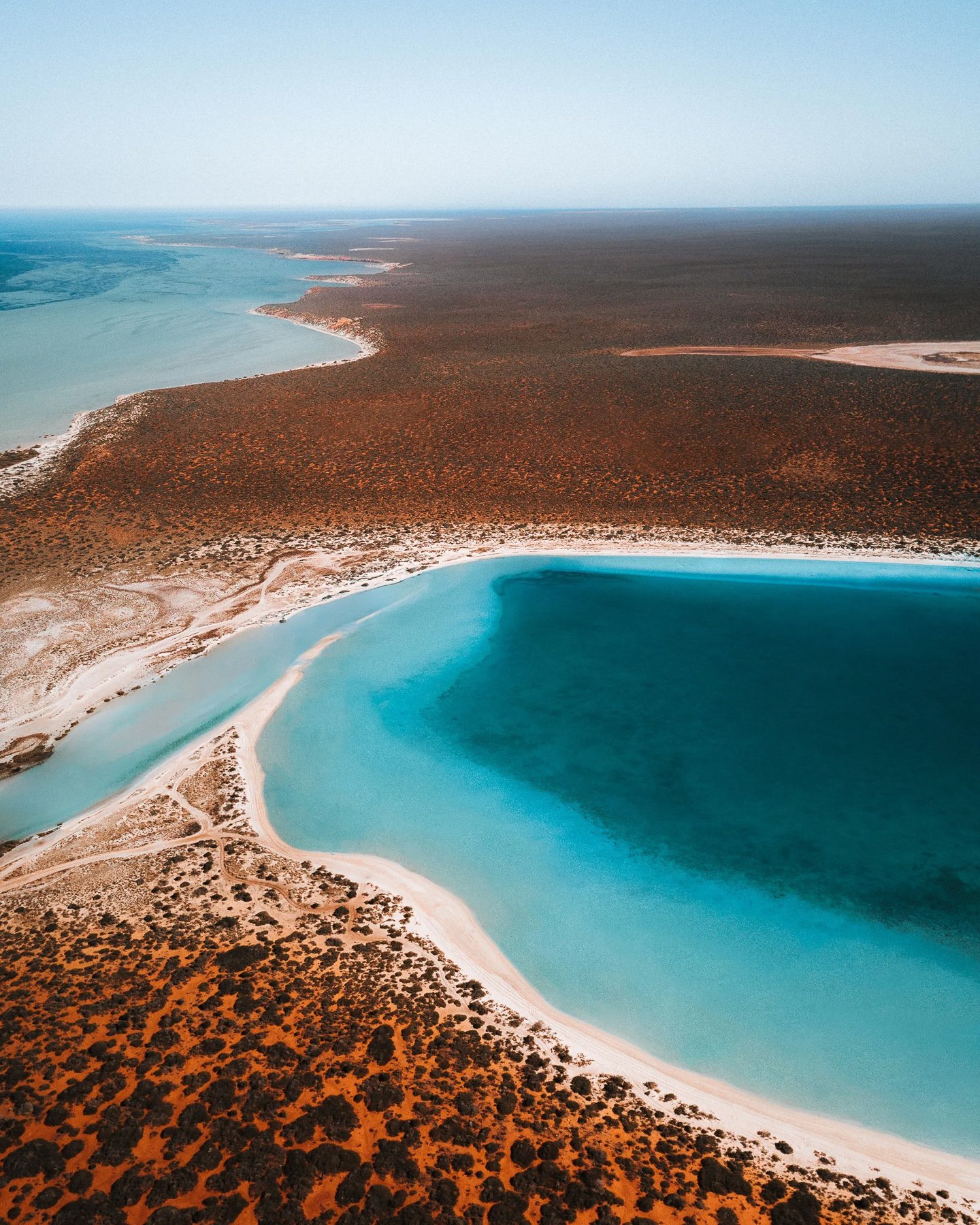
If you’re travelling with a high-clearance 4WD you’ll definitely want to explore Francois Peron National Park. This is one of the places where having a 4WD really opens up more of the coastline. The tracks take you through red sand and out towards remote beaches and coastal cliffs, with incredible contrast between red earth and turquoise water that Shark Bay is known for. Big Lagoon is one of the most popular stops and is a beautiful place for kayaking, swimming and spending a few hours by the water.
If you don’t have a 4WD, you can instead spend more time exploring Denham, visit Monkey Mia or slow down and enjoy the beaches around Shark Bay. Our favourite spots were Little Lagoon and Little Lagoon Creek Lookout.
There are a few camping options available around Shark Bay. One of our favourite campsites was Goulet Bluff. We camped right down near the water’s edge and part of the beach was covered in tiny shells. What really made this spot memorable for us though were the sunrises and sunsets. Waking up right beside the water was such a beautiful way to start the morning. Shark Bay is one of the stops I wouldn’t skip on a Perth to Exmouth road trip, especially if you have the full 14 days.
Day 6 – Shark Bay to Coral Bay
Today is one of the longer driving days, so I’d have one last swim in Shark Bay before getting back on the road. There’s not a huge amount to see on this section of the drive. You can stock up on supplies in Carnarvon and aim to arrive in Coral Bay with enough time to settle in before sunset. Once you reach Coral Bay, you’ve officially made it to the Ningaloo Reef.
Day 7 – Coral Bay
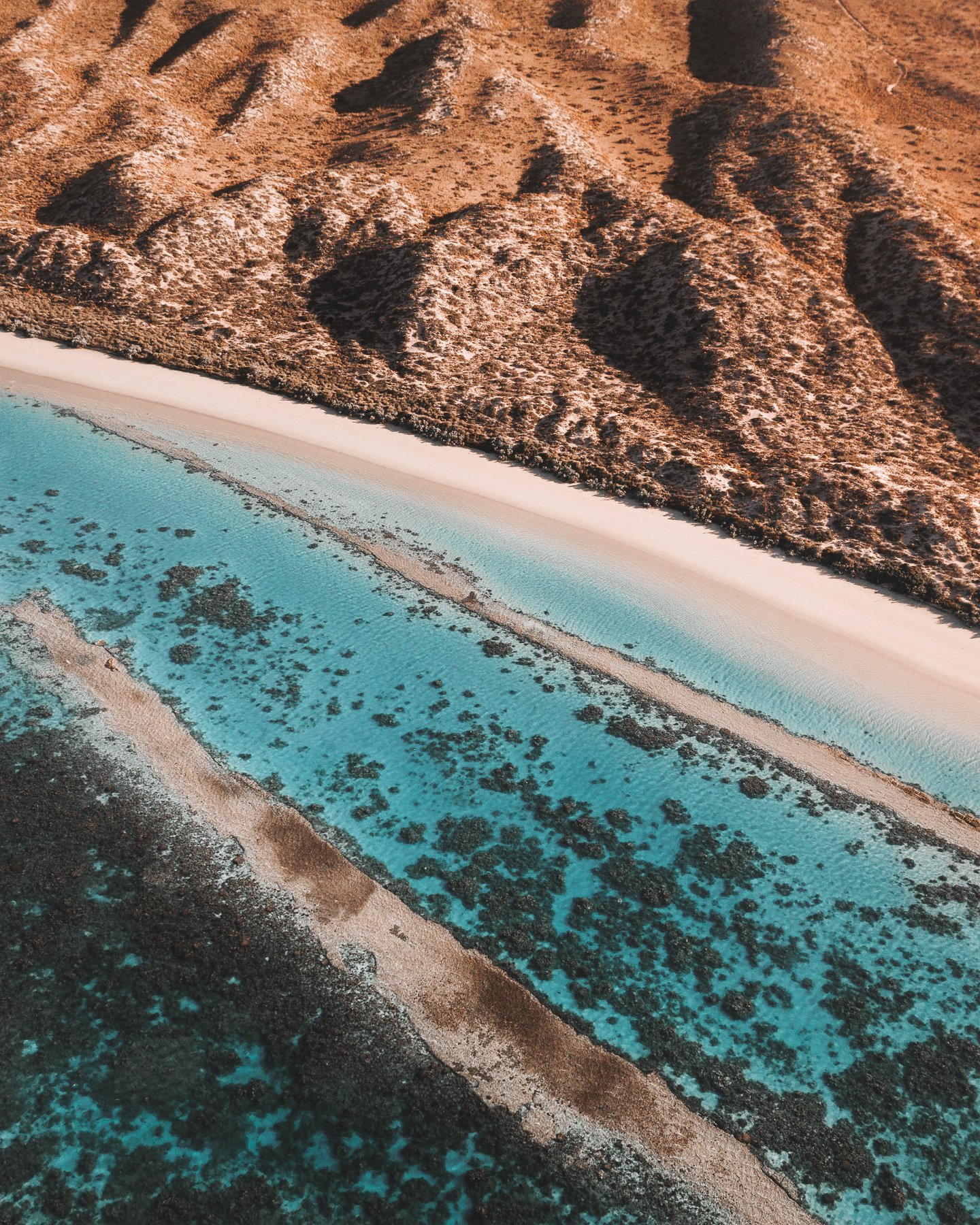
What makes Ningaloo so special is how accessible the reef is. Unlike places where you need to book a boat tour just to reach good coral, here you can grab your snorkel, walk into the water from the beach and start diving at your own pace.
The reef sits incredibly close to shore and there’s an abundance of marine life. Spend the morning snorkelling, hang out on the beach and take a break from the long days of driving. You can also book boat tours from Coral Bay if you want to get further out onto the reef and potentially see manta rays, whale sharks or other marine life depending on the season.
Day 8 – Coral Bay to Exmouth
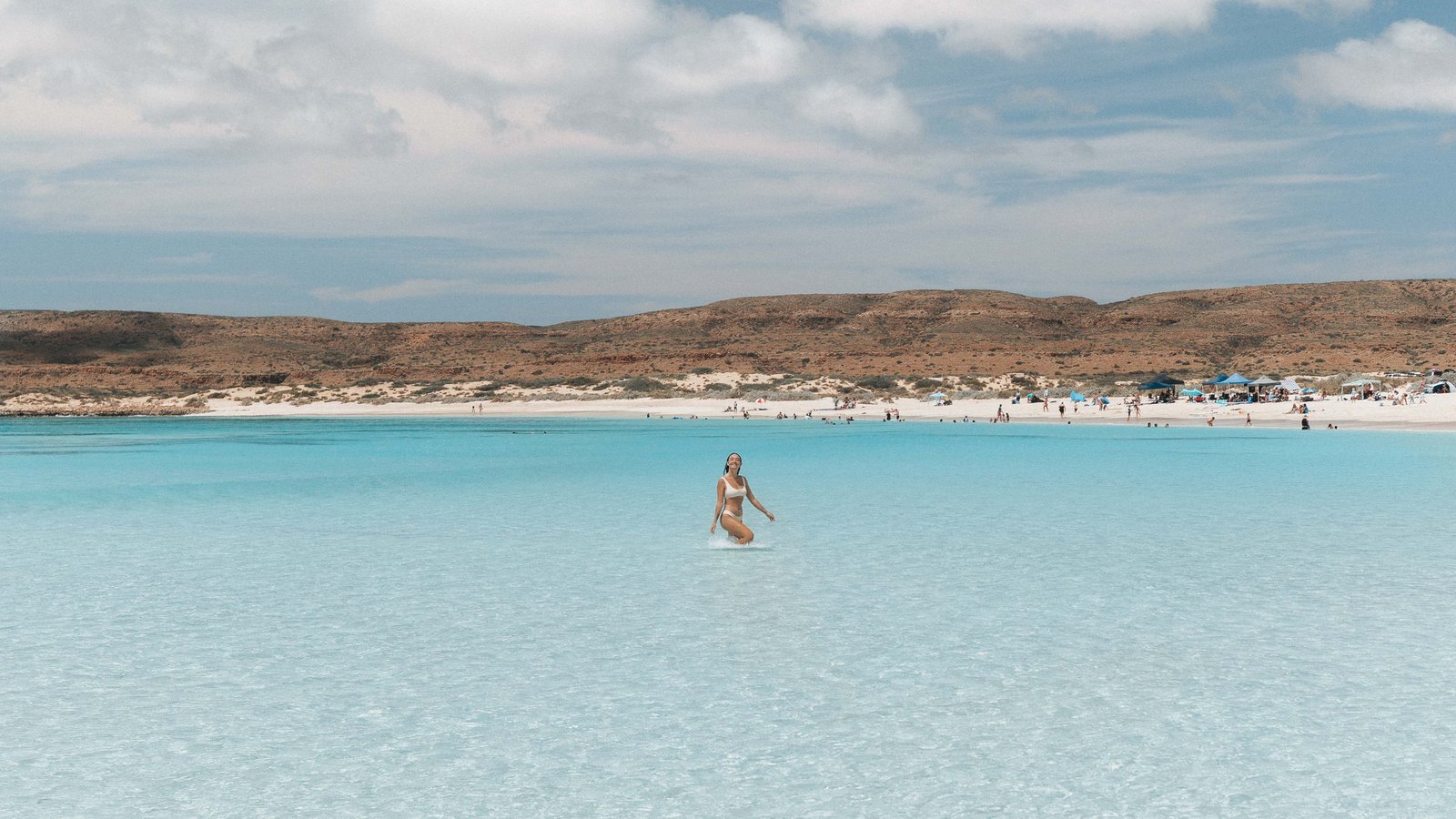
It’s around 1.5 hours from Coral Bay to Exmouth and once you get there you’ll understand why people make the long drive from Perth. The town itself is small, but you’re surrounded by the Ningaloo Reef, Cape Range National Park, ridiculously clear beaches and some of the best snorkelling we’ve ever experienced in Australia.
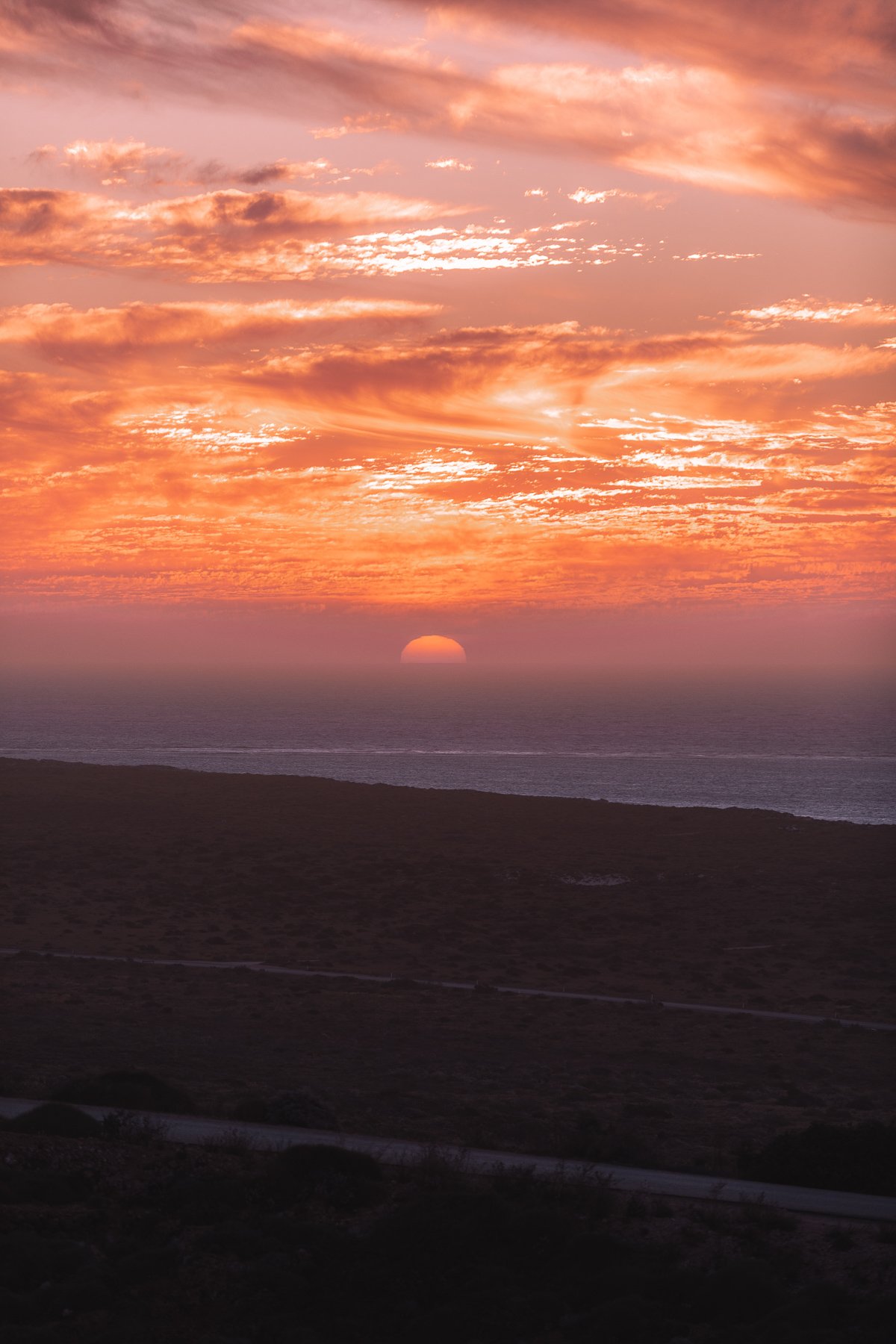
Spend your first afternoon getting settled and then head to Vlamingh Head Lighthouse for sunset. Watching sunset here became a bit of a ritual for us while we were staying in Exmouth. The lighthouse sits high above the coastline and gives you a huge panoramic view as the sun drops over the ocean.
Still looking for somewhere to stay? You can browse accommodation in Exmouth here.
Day 9 – Cape Range National Park
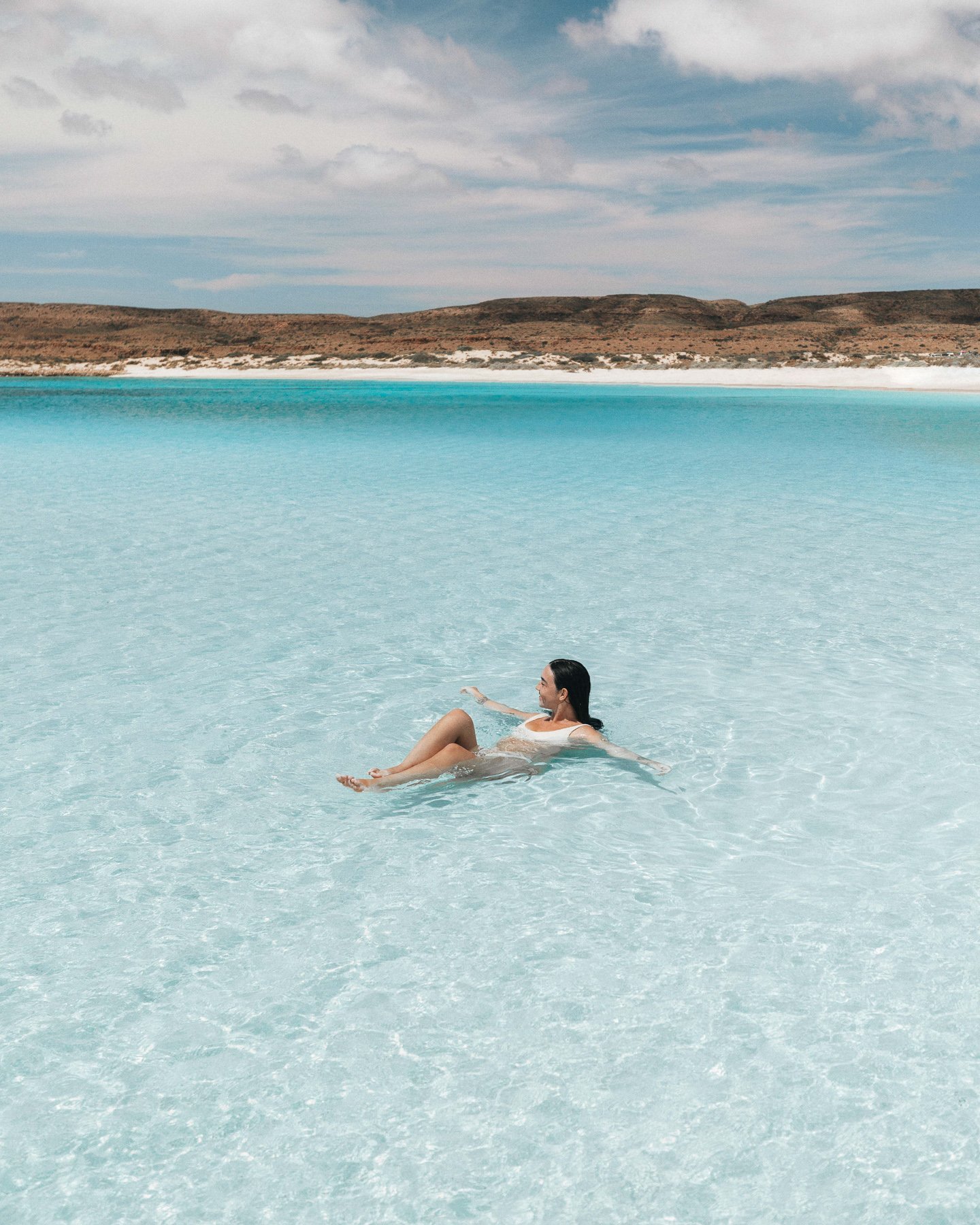
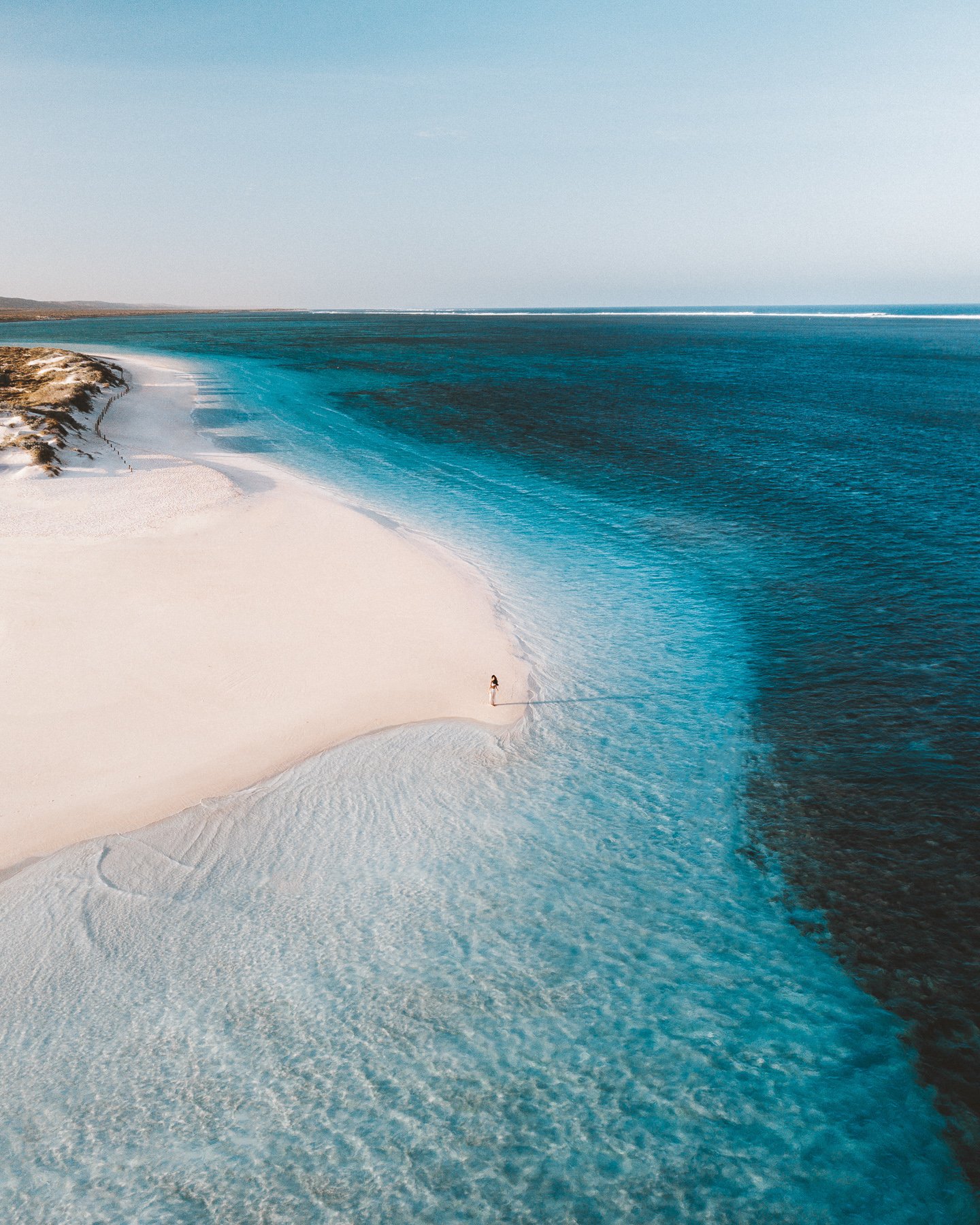
Turquoise Bay is undoubtedly one of the most famous beaches on the west coast, and for good reason! Just like the name suggests, the bay has some of the most breathtaking blue water and white sandy shores.
Grab your snorkel gear and swim from shore to the Ningaloo Reef where you’ll be able to see the abundance of marine life and beautiful coral. There are also two snorkelling loops you can do. The loops are natural currents that flow from one end of the bay to the other. This allows you to just float along as you take in the underwater views.
Bay loop is located on the northern half of the bay which typically has a weaker current. This is great for those that are not the best swimmers or are worried about the currents as they can sometimes be quite strong. Drift loop is the more popular snorkelling area. From the beach, walk to the southern end and the current will take you back to where you started. We found drift loop to be a lot more beautiful with plenty of coral, colourful fish and even turtles.
Before jumping in the water at either of the loops, be sure to check the strength of the current to make sure you’re comfortable and feel safe.
Day 10 – Cape Range National Park
There’s so much to do in the national park that we’d recommend dedicating another full day to check out the other beaches and snorkel spots. Oyster Stacks has some of the most beautiful coral and unique fish we’ve seen around Exmouth, although getting into the water is a little trickier because the shoreline is rocky and sharp. It’s also important to visit at the right tide. The reef here is extremely shallow, so access is tide dependent to help protect the coral.
Afterwards, head to Osprey Bay. This is another of our favourite beaches in the national park, with calm blue water and great snorkelling. You’ll generally need to swim a little further offshore but we’ve spotted turtles and plenty of coral here. Osprey Bay also has a campground right beside the beach, which is one of the most popular places to camp inside Cape Range National Park. The beaches in the national park were some of our favourite stops on this Perth to Exmouth road trip, so I’d definitely allow at least two days here.
Day 11 – Swim with Whale Sharks or Explore Exmouth
If there’s one big-ticket experience you’re going to book in Exmouth, swimming with whale sharks would be it. Unfortunately, we weren’t able to get onto a tour when we were there, but Exmouth is one of the best places for swimming alongside them on the Ningaloo Reef.
If whale shark tours are booked out like they were for us, you can spend the day checking out Exmouth town and the nearby beaches. Froth Brewery and Whalebone Brewery are two popular places in town to grab a drink and some food.
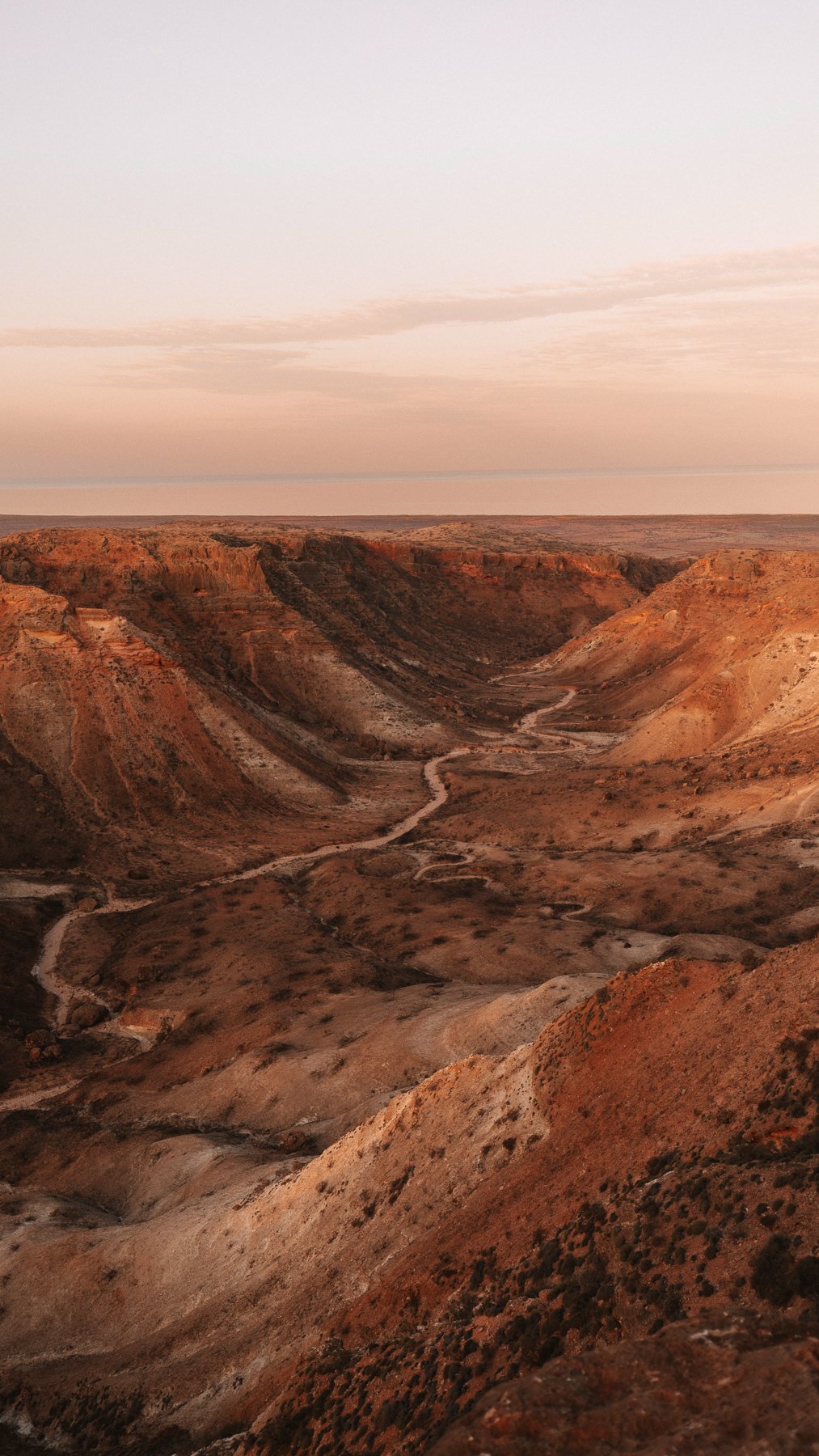
In the afternoon, be sure to drive out to Charles Knife Canyon. This is one of the best places to see a completely different side of Exmouth. Instead of turquoise water and white beaches, you’ll have views looking across the rugged mountains and gorges. Golden hour is the best time to see the valley as the low sunlight creates long shadows across the ridges and gives the whole landscape a beautiful golden glow.
Day 12 – Exmouth Beaches and Surfing
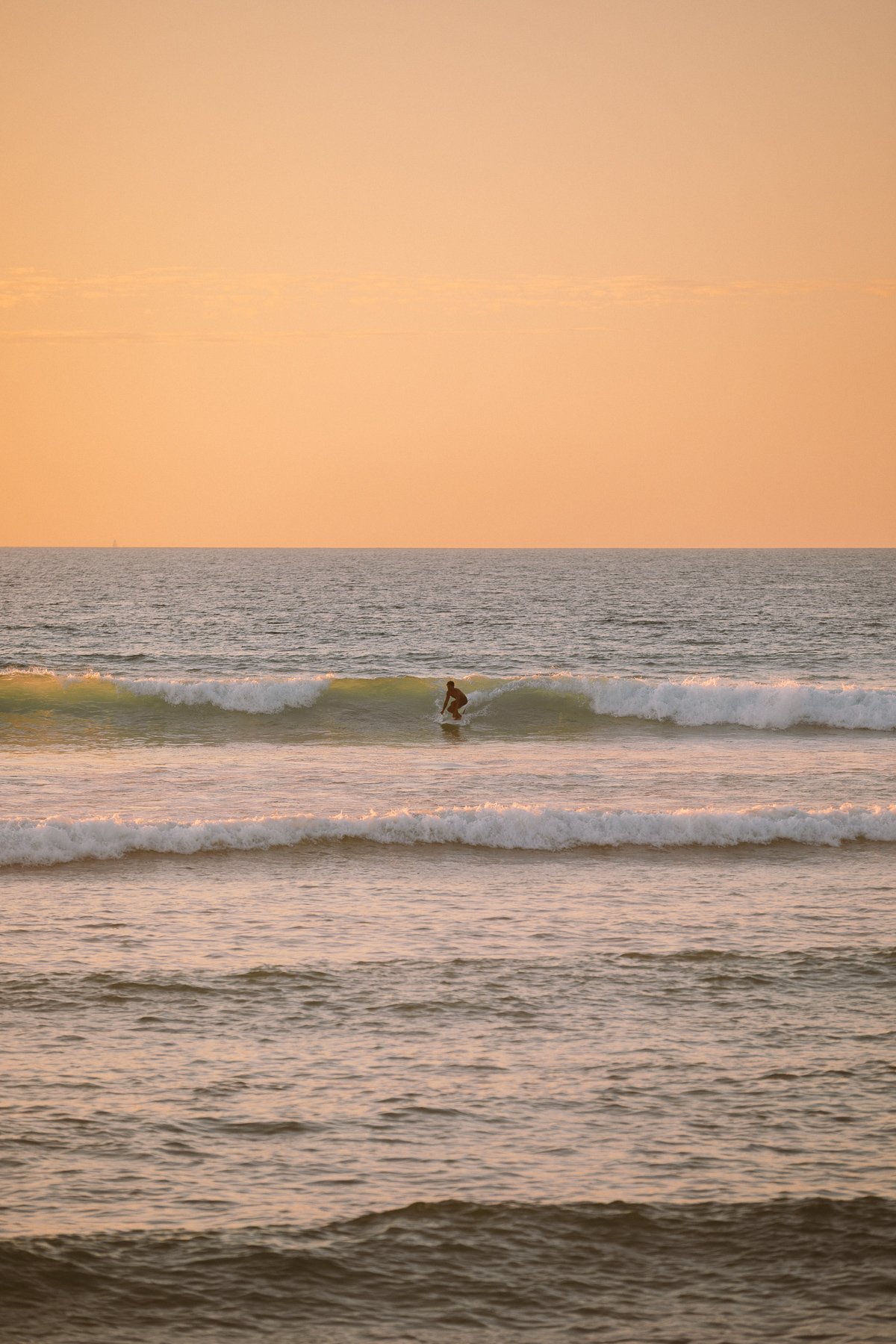
Spend your last day in Exmouth checking out some of the beaches in the area that are well known for surfing. Dunes Beach is one of the most popular surf spots and is a ton of fun. Another favourite of ours was Hunters Beach, just across from the lighthouse.
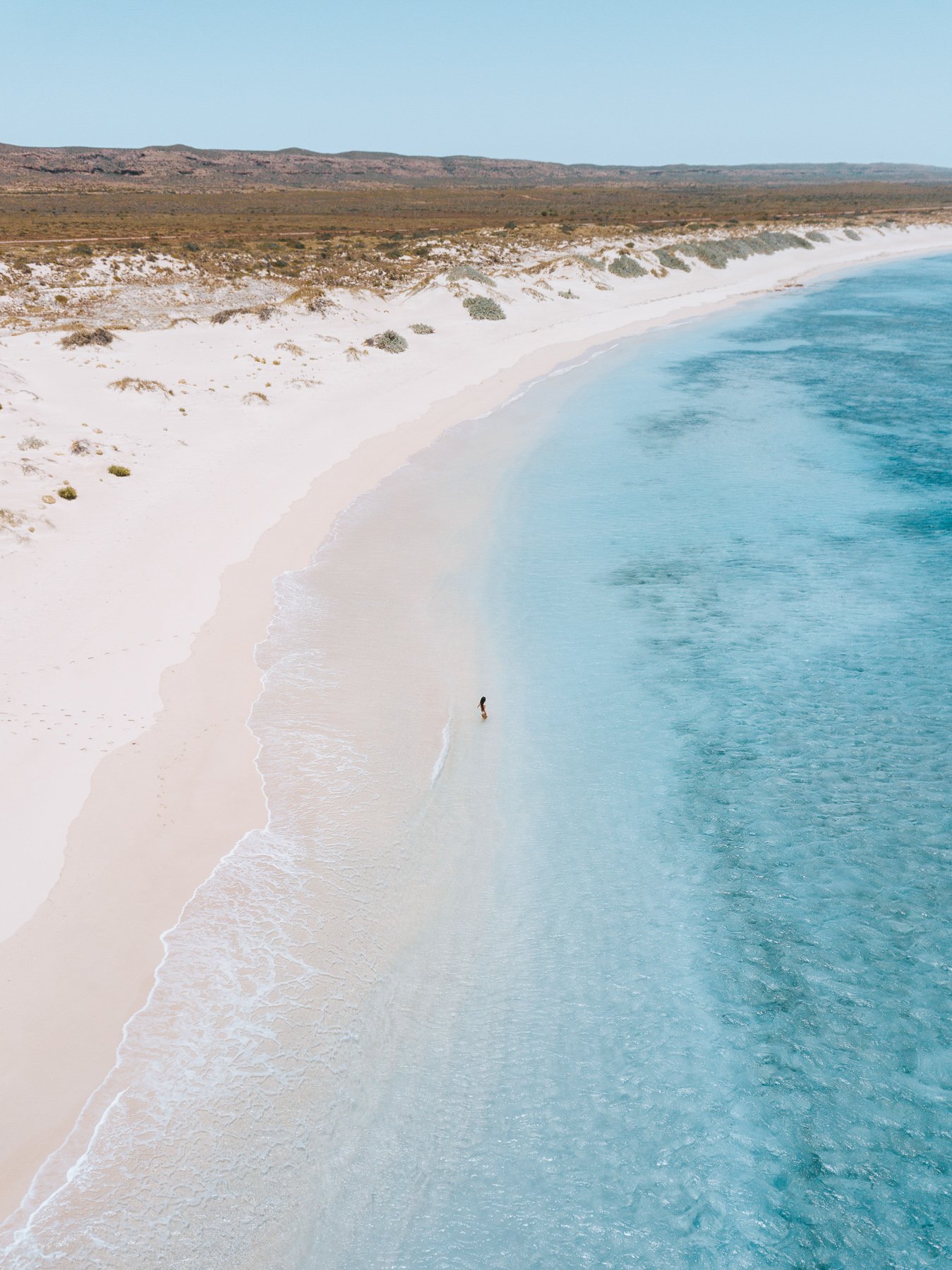
Both beaches are great for surfing, but aren’t the best for relaxing or swimming due to the rocks and reef. If you’re after somewhere to swim and relax instead, two of our favourites are Wobiri and Jansz Beach.
Day 13 – Start the Drive Back to Perth
Eventually, all good things come to an end and it’ll sadly be time to leave Exmouth and start the road trip back down to Perth. The drive from Exmouth down to Perth is long, so it’s best not to do the whole thing in one day. It’s much easier to split the journey and use the return trip to revisit places you loved or stop somewhere you didn’t have enough time for on the way north.
Day 14 – Final Stretch to Perth
We always try to spend another night around Jurien Bay or Sandy Cape before heading into Perth. After a long day in the car, having one last swim and night beside the beach is a pretty nice way to finish the road trip.
After two weeks of pink lakes, red gorges, beach campsites, turquoise water and what feels like endless snorkelling, you’ll probably understand why a Perth to Exmouth road trip is so popular. The drive to Exmouth might be long, but it’s definitely worth the journey.
Where to stay in Exmouth
You have three main choices for where to stay around Exmouth. You can either stay in town, camp in the National Park, or stay at the homestead, which is in between the two. We always base ourselves at Yardie Homestead Caravan Park, as it’s the perfect distance between Exmouth town and many of the beaches and attractions around Cape Range.
If you want to camp inside Cape Range itself, I’d book as early as you can, as the campgrounds tend to book out. Campgrounds such as Osprey Bay, Kurrajong and Yardie Creek require bookings, and the beachfront locations are very popular.
If you’d rather stay in town, you can browse accommodation in Exmouth here. Staying in Exmouth itself puts you closer to restaurants, supermarkets and shops, while Cape Range National Park is still an easy day trip.
Planning more of Australia?
You’ll find 500+ of our favourite places, hidden gems, road trips and travel tips in my interactive Australia Travel Guide.